
Philosophy
It is never an easy task to summarize one's entire philosophy of education into bullet points. That said, I express my educational beliefs in broad terms in this section. Below you'll find more about what I believe, why I teach, and my concept of a "teacher."
I believe...
Knowledge is powerful.
An educator must teach students how to learn.
Everyone has a right to express their thoughts respectfully.
An educator must teach students how to belong to a community (and why it's important).
It is important to ask questions - especially the most difficult questions.
The desire to learn must continue outside of the school walls.
Why I Teach
The reasons why I teach are connected to my self-conception. Although my self-conception is in a continual process of development, there are a few recurring themes that remain constant. When considered as a whole, these various, constant themes represent who I am. Because my self-conception is an amalgamation of various ideas such as, “what I value” and, “what I am passionate about,” and this conception is linked to the reasons why I want to be a teacher, I’ll briefly discuss my values, aspirations, and goals as a way to present, “who I am” and, “why I want to teach.”
I value strong communities
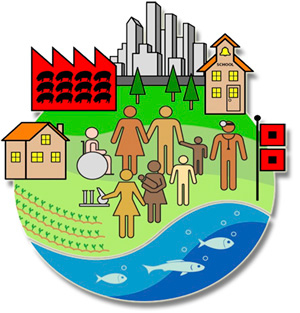 which is, in the most basic sense, one that appreciates diversity of thought, encourages open debate, and strives towards mutual understanding. Diversity of thought allows community members to consider more angles and open debate allows thoughts and opinions to be shared and analyzed publicly. As a teacher, I am accountable to the parents and students in my community. Because of this, I would encourage my students (who will one day perhaps become parents) to allow their roots of knowledge to grow deeply and to remain flexible to counter-forces of opinion while engaging in debate with other community members.
I aspire to inspire students to seek out more information.
It is my goal to give more thought-provoking questions than answers. To do this effectively, I must relate to my students. I must encourage students to be aware of their cultural past and to be proud of their differences. I must learn how to present material in new ways that are engaging, relevant, and connected to these differences. To be a great teacher, I will constantly engage myself with the changing attitudes and values of my community while encouraging students to do the same with values and attitudes of the past.
I want to inspire students to learn more so that they will contribute more during public debate in their community. My mission as a teacher is to equip them with the knowledge needed to support their opinions and the skills to acquire new knowledge as they progress through life.
I agree whole-heartedly with the words of Gayle Felton found in her article, “Teaching Towards Gender and Ethnic Inclusivity.” In it she writes “It is…true that the heart can change human laws [but] educators [must] work actively for justice and liberation along with others who share these goals” (Felton 153). She thinks it is “the special responsibility and privilege of…education to seek to transform the beliefs and values, the attitudes and assumptions, the goals and purposes of individuals and communities” (Felton 153). For her, an educator’s job is to seek to transform beliefs. To do so, a teacher must challenge students and ask them to scrutinize, perhaps even “problematize,” certain issues.
Felton, Gayle C. “Teaching toward gender and ethnic inclusivity.” Religious Education. 91.2.
(1996): 147-157. Web. 29 June 2009.
Also, as the image illustrates below (click to visit the host site!), a teacher should encourage students to truly focus on the task they perform. We live in a world of distractions - the hum of music while studying for a math exam during dinner, for example - and one should take time to breathe in, shut out, and tune in in order to learn something well. I want to help students realize the joy of discovering how multi-layered the world is. In order to demonstrate that fact, we will need to focus on a topic and unravel the layers. After all, it's far easier to peel the layers off one onion than it is to try three or four at a time.

What IS a Teacher?
A teacher is a confident guide and resource for student learning and development. The best teachers are not pendantic lecturers that administer the curriculum verbatim! Great teachers know when to allow peer learning and self-discovery to take place. Once the students have reached their goal, however, the learning must not stop. I think guiding my students towards the obtainment of knowledge is neither the end of my job as an instructor nor the end of their job as a student. They must then reevaluate society and themselves in light of what they have just learned.
In her paper, “Partners in learning: Twelve ways technology changes the teacher-student relationship,” Beth McGrath states that the traditional “’sage on the sage’ approaches are no longer appropriate” (McGrath). A teacher must guide her students through the learning process, not bludgeon them over the head with disconnected facts.
Her article, which discusses the way technology is shaping education, notes that technology will free the “teacher from playing the role of the expert” and instead allow the teacher to admit when she doesn’t know an answer and instead guide the student to accurate information (McGrath). The instructor’s job, then, will be to guide the student through the analysis of the new information.
McGrath, Beth. “Partners in learning: Twelve ways technology changes the teacher-student
relationship.” T.H.E. Journal. 25.9. (1998): 58. Web. 30 June 2009.